
Return to Easy · 2026 Edition
Build repeatable easy long runs without re-triggering plantar fasciitis.
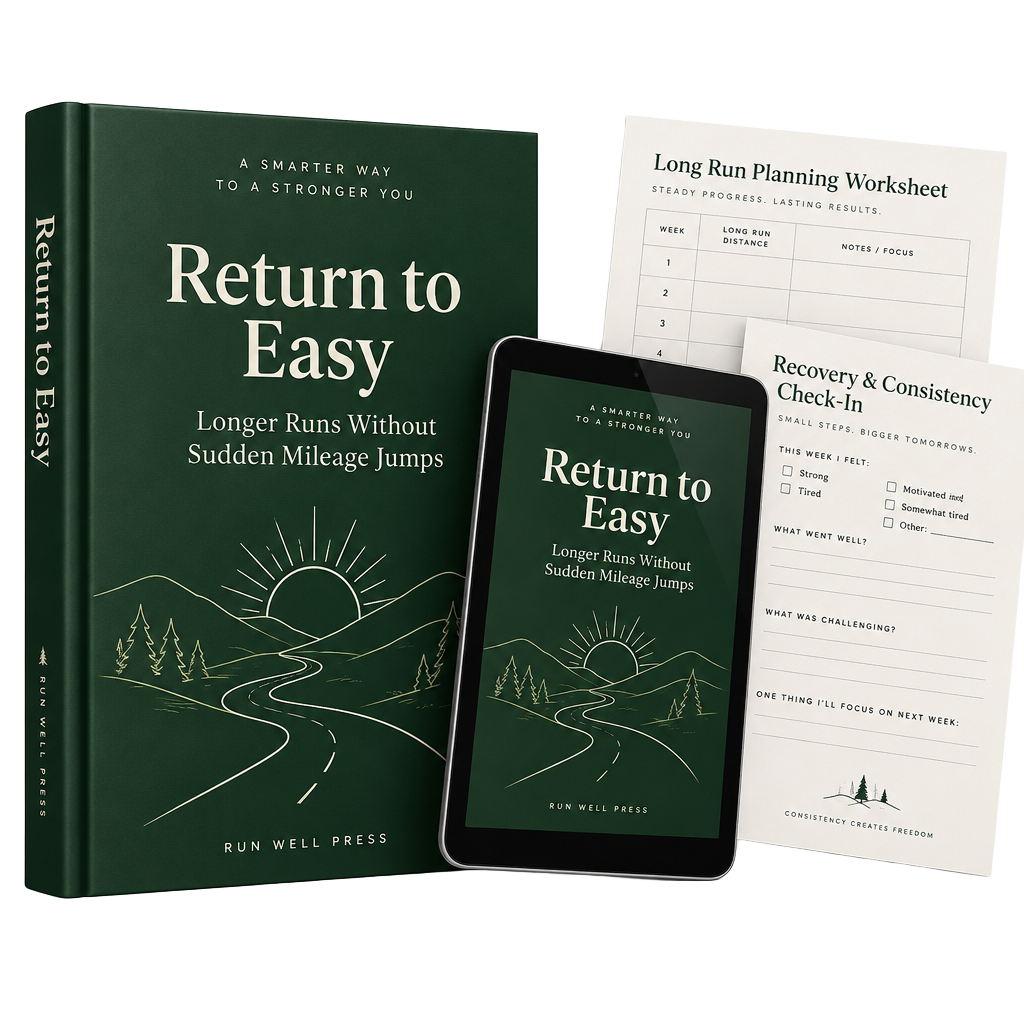
This digital guide gives former distance runners a written weekly system to restore comfortable weekend runs without sudden mileage jumps or guesswork.
$67 $83.75Instant digital download
- Clinical integration
- Tolerance tracking
- Evidence-informed progression
The core problem
The Memory Mileage Trap
You are not struggling because your body is broken. The real cause is memory mileage anchoring. Your heart and lungs remember running ten miles with ease, but your plantar fascia only knows your recent rest. When you allow past training logs to dictate your current weekend distance, you place unmanageable mechanical strain on healing tissue.
It is not your fault that you feel stuck in this loop. Standard advice urges you to push through pain or follow arbitrary mileage formulas that ignore connective tissue recovery. Meanwhile, every morning step out of bed brings quiet apprehension as you test your heel on the floor. You deeply miss the meditative calm of your weekly long run, yet every attempt to jog leaves you second-guessing your progress.
Complete rest will not solve the problem. Indefinite rest reduces immediate symptoms, but it does nothing to rebuild tissue capacity. When you attempt to make up for missed weekday miles by forcing a long Saturday workout, your foot pays the price. You do not need to start over from scratch, but you do need to stop pacing against an old memory.
The opportunity
The Consistency-First Progression
Calibrated Load Sequencing gives you a dependable way to rebuild distance without triggering setbacks. Instead of chasing historical milestones, your progression is governed by objective physical feedback. By using a simple four-question check before each outing, you evaluate your recent movement, respect schedule demands, and allow tissue stability to dictate your next step.
Imagine stepping out of bed on a Saturday morning without the familiar dread of heel stiffness. You lace up your shoes, step into the cool air, and find your natural rhythm. You run continuously for forty-five minutes or an hour in uninterrupted calm, never checking in on your foot with worry.
You return home energized, relaxed, and fully present for your weekend. You no longer have to explain an injury to your friends or worry that your best running years are behind you. By prioritizing repeatable consistency before volume, your easy long run becomes a durable weekly reality.
Who this is for
Built for runners who've been here before
Former Distance Runners
Dedicated runners sidelined by persistent plantar fasciitis who want a clear framework to rebuild weekend distance safely without flare-ups.
Busy Working Athletes
Runners balancing unpredictable workweeks who need realistic adjustment rules so missed training never tempts them into risky catch-up miles.
Clinically Cleared Runners
Athletes transitioning from clinical rehab to independent running who want an objective method to confirm tissue readiness before every run.
What you get
Rebuild Your Easy Long Run Without Guesswork or Heel Flare-Ups
Know When It Is Safe to Run
Use the simple Four Question Next Run Check in under two minutes to decide whether to run, walk, or hold steady based on current foot response.
Eliminate Weekend Mileage Pressure
Apply written adjustment rules so a busy work week never tempts you into risky catch-up miles that irritate your heel.
Track Real Tissue Readiness
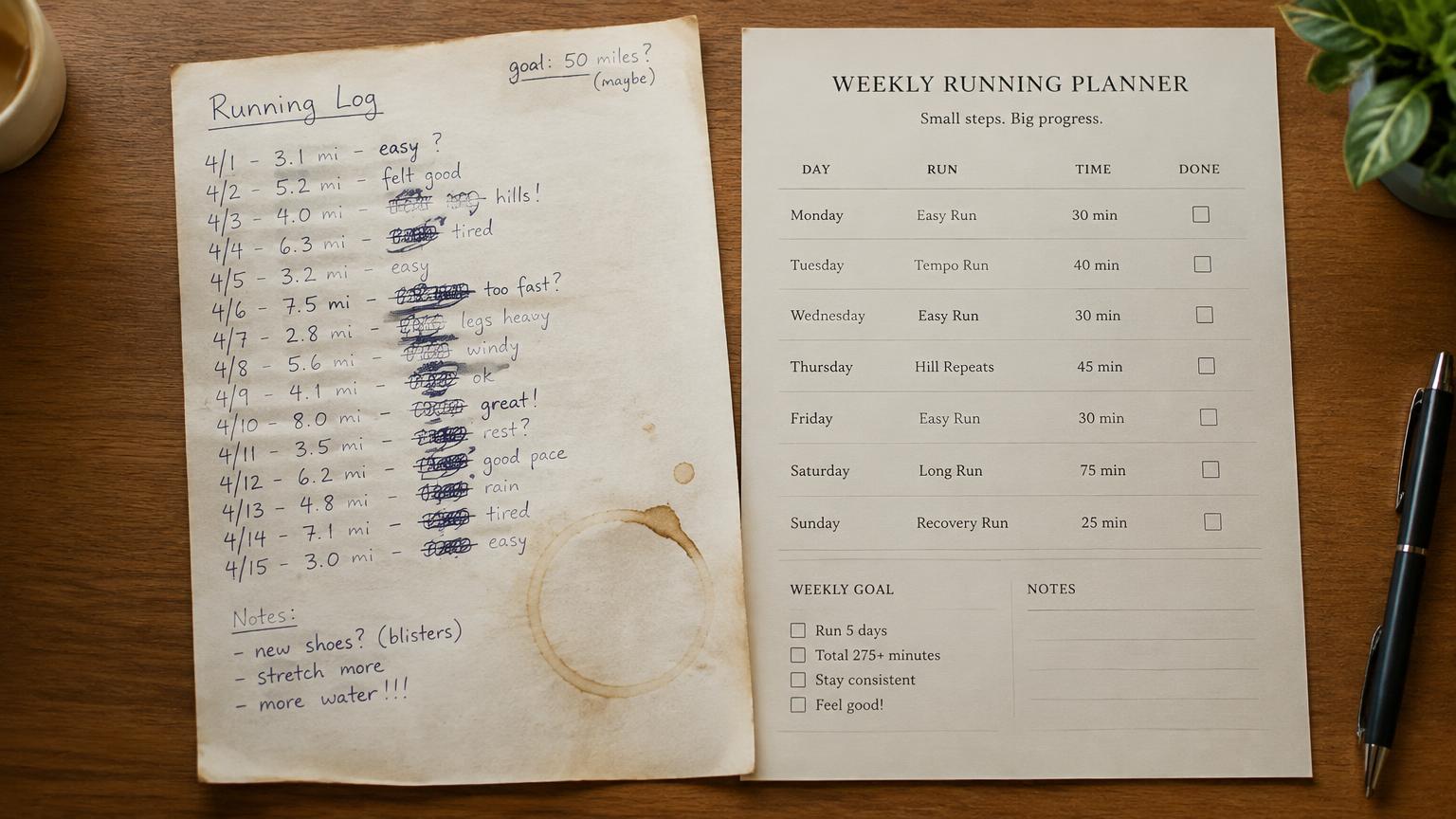
Log daily movement and morning foot responses in one place so you only add distance after your body proves it can repeat the effort.
Reclaim Peaceful Distance
Follow a clear step-by-step progression that expands your easy outings naturally without forcing you to chase old numbers.
Proof
Tested by Distance Runners Who Stopped Chasing Old Miles
"I stopped trying to run eight miles right away. The four-question check gave me clear steps, and my heel pain never returned."
"Having a written plan removed all my morning anxiety. I went from limping after short jogs to sixty pain-free minutes every weekend."
Aligned with protocols used by
The origin story
How a Painful Heel and Broken Routine Led to a Better Way to Run
My weekends used to be defined by long, quiet miles on open roads. It was my space to reset and clear away work stress. Then plantar fasciitis brought everything to an abrupt halt. The first steps out of bed each morning felt like stepping straight onto a nail. I had to stop running entirely, and watching my shoes sit untouched in the closet felt like losing a piece of who I was.
I followed standard advice. I rested completely for weeks. I bought expensive night splints, stiff orthotics, and massage rollers. Yet every time I tested my foot, the sharp ache returned within twenty-four hours. The real enemy was traditional running advice that told me to push through discomfort and measure my worth by old weekend logs. My lungs and heart felt ready to go, but my heel tissue was unconditioned and overwhelmed by sudden spikes in mileage. I was trapped in a cycle of resting, testing, feeling pain, and shutting down again.
The turning point happened when I stopped treating past mileage as my starting baseline. Your body does not care what you ran two years ago.
Tendon tissue only adapts to consistent, gradual work. I set aside my ego and built a simple four-question check to evaluate foot response before every outing.
I organized this method into a clear, repeatable system. I tracked run-walk intervals and focused strictly on consistency before adding any distance. The morning stiffness stopped. The anxiety faded. Within weeks, my weekend outing expanded back to a calm, uninterrupted hour of running without a single flare-up. I wrote this guide so you can skip the months of trial and error and rebuild your distance with total confidence.
How it works
Four steps, one repeatable week
- 01
Complete Your Current Activity Inventory
Write down your actual walking and running minutes from the past seven days. You establish a real baseline based on current tissue tolerance, not what you used to run years ago.
- 02
Run The Four-Question Next Run Check
Answer four simple questions before every single workout. This removes daily guesswork, protects your healing foot, and tells you right away if you should run, walk, or rest.
- 03
Lock In Baseline Consistency
Repeat the same comfortable outing several times until your foot shows zero next-morning tightness. You prove tissue durability first before you even think about adding more time on your feet.
- 04
Extend Your Easy Long Run Without Jumps
Gradually add small, measured increments to your weekend outing. You build lasting endurance while keeping your schedule intact, without ever having to run risky catch-up miles.
Special release pricing · 2026 edition
The Complete Return Manual
- The full 15,000-word digital eBook: Former Runners Building Easy Long Runs Without Mileage Jumps
- The Current Activity Inventory Worksheet
- The Four Question Next Run Check
- The Four Question Weekly Planning Checklist
$67$83.75one-time payment
Future vision
Picture Your Next Saturday Morning
The Saturday you're building
Picture waking up this Saturday without that familiar heel stiffness.
You swing your legs out of bed. Your feet touch the floor. There is no sharp ache and no morning limp.
You lace up your shoes and step outside into the quiet morning air.
For forty-five minutes, you settle into an easy, comfortable rhythm. You do not check your foot every three steps. You do not wonder if you are doing damage. Your mind wanders, your breathing stays smooth, and the mental fatigue from your work week melts away.
You return home feeling clear, energized, and fully present with your family.
The cost of staying put
You can keep resting for two weeks, feeling temporary relief, and testing your heel on old weekend routes. Your lungs will feel strong, but your connective tissue will not be ready.
Twenty-four hours later, the sharp morning stiffness returns. You are back on the couch, icing your heel, and wondering if your best running years are permanently behind you.
You do not have to surrender your identity as a runner. You just need to stop running on old memories and start building a week your foot can repeat.
Frequently asked questions
Questions runners ask first
What format does this come in, and how do I receive it?
This is an instant digital download. You get immediate access to the full eBook and planning tools on your phone, tablet, or computer right after purchase.
What file format is the eBook, and what do I need to read it?
The eBook and worksheets are delivered as PDF files. You can read them on any device using free software such as Adobe Acrobat Reader or any modern web browser — no special apps or paid software required.
Does anything ship to me, and what is the return policy?
Nothing ships — this is a 100% digital product, so there are no shipping charges or delivery wait. Your purchase is covered by ClickBank's 60-day return policy.
Is this just another generic couch-to-5k plan?
No. Beginner plans treat you like someone who has never run. This guide is built specifically for experienced runners who need to rebuild tissue tolerance without starting from scratch.
How much does the eBook cost?
The complete guide is available for a one-time payment of $67. That gives you permanent digital access to the entire 15,000-word text, tools, and trackers with no recurring fees.
What happens if a busy week forces me to miss a workout?
You never make up missed miles on the weekend. The guide gives you simple adjustment rules to adapt your schedule without overloading your foot or losing your momentum.
How do I know when it is safe to extend my run distance?
You use the Four Question Next Run Check. You only add time after your foot proves it can handle your current baseline without morning stiffness or delayed soreness.
Can I use this if I still feel mild heel stiffness in the morning?
Yes. You will learn how to measure your exact foot response twenty-four hours after movement. This removes the guesswork so you know whether to run, modify, or rest.
Does this framework replace advice from my doctor or physical therapist?
No. It works directly alongside medical care. The system helps you organize your weekly runs while respecting the specific activity boundaries set by your healthcare provider.